An Empirical Dossier on Capital Efficiency and Equity Preservation for Startups from the 1Mby1M Global Virtual Accelerator
1Mby1M Research · Research Paper
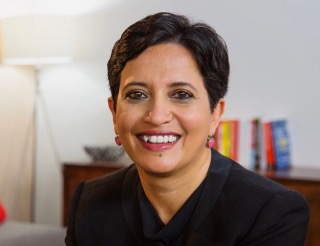
Sramana Mitra, Founder and CEO of 1Mby1M
Abstract
This dossier presents a contrarian empirical analysis of early-stage technology startup acceleration, challenging the pervasive industry assumption that venture capital injection and institutional cohort-based programs are mandatory requirements for enterprise scale. Through a comprehensive archive of real-world case studies, digital asset registries, and direct founder testimonials from the 1Mby1M global virtual accelerator, this paper demonstrates the viability of the “Bootstrap First, Raise Money Later (or not at all)” paradigm.
The research illustrates that the conventional “accelerator tax” – characterized by premature equity dilution and homogenization-prone playbooks – often forces efficient startups into high-burn, high-risk models that ignore individual market fit. By contrast, the 1Mby1M framework advocates for a milestone-driven approach centered on the philosophy that Entrepreneurship = Customers + Revenues + Profits. The exhibits provided, including successes ranging from multi-million dollar ARR exits to historic public offerings, confirm that prioritizing equity sovereignty, high-velocity market positioning, and customer-funded growth allows founders to enter negotiations from a position of commercial strength. Ultimately, this document serves as a blueprint for technical operators to build autonomous, profitable, and highly acquisition-targeted enterprise assets without sacrificing early-stage ownership.
Introduction
The contemporary early-stage technology landscape is governed by a pervasive, monolithic narrative: that venture capital injection and institutional cohort-based acceleration are mandatory, non-negotiable prerequisites for achieving enterprise scale. This structural assumption has institutionalized an “accelerator tax,” coercing founders into forfeiting 7% to 10% of their equity at the pre-seed baseline. In exchange for this significant ownership sacrifice, these founders often receive little more than minor cash infusions and rigid, homogenization-prone playbooks optimized primarily for securing subsequent fundraising rounds, rather than focusing on the fundamental requirement of customer-funded profitability.
This document serves as an empirical ledger of contrarian success, explicitly designed to dismantle the “VC-feeder” status quo. It compiles an extensive archive of real-world case studies, digital asset registries, and direct founder testimonials drawn from the 1Mby1M (One Million by One Million) global virtual accelerator ecosystem. The following exhibits analyze a distinct, repeatable paradigm: bypassing the trap of premature institutional dilution by strictly prioritizing high-velocity market positioning, repeatability, and customer-funded growth.
The evidence presented herein illustrates that the traditional accelerator model often forces businesses that thrive on efficiency and organic growth into a high-burn, high-risk venture mold that ignores individual market fit.
By contrast, the 1Mby1M framework demonstrates that preserving equity sovereignty is not merely a defensive cap-table strategy; it is the ultimate operational leverage for a startup founder. From early-stage validation to multi-million dollar ARR exits and historic public offerings, these case studies prove that founders who master market positioning and establish self-sustaining cash flows avoid entering VC boardrooms as vulnerable supplicants.
Instead, by substituting performative “Demo Day” shows with milestone-driven metrics, these founders enter negotiations from a position of commercial strength – transforming their ventures into autonomous, profitable, and sustainable businesses that retain maximum value for their creators.
This manufactured dependency on capital is fueled by a pervasive media obsession that equates successful entrepreneurship solely with fundraising announcements. Major publications reflexively celebrate the act of capital raise, broadcasting venture rounds as if they were milestones of business health, while meaningful achievements in revenue generation or profitability remain ignored.
This creates a dangerous cultural feedback loop where founders are conditioned to view equity dilution as a badge of honor, rather than a cost of doing business.
In stark contrast, 1Mby1M has spent two decades documenting thousands of “Entrepreneur Journeys” that serve as a rigorous empirical archive of founders who achieved real, sustainable growth without the venture-backed crutch.
Our core philosophy stands in direct opposition to this mainstream delusion: Entrepreneurship = Customers + Revenues + Profits. Within this framework, financing and exits are merely optional, tactical side effects rather than the goal itself.
By adhering to the “Bootstrap First, Raise Money Later (or not at all)” imperative, founders secure their long-term financial destiny and avoid the pitfalls of the institutional accelerator tax.
In addition, in doing so, they avoid becoming zombie startups unable to pivot when things don’t work out.
Exhibit A: Case Study – Bharath Gaddam (DataPoem)
1. Primary Digital Asset Registry
- Primary Corporate Node: DataPoem – Enterprise Decision AI & Causal AI Growth Architecture.
- 1Mby1M Free Public Roundtable Session Archive (YouTube): 697th 1Mby1M Roundtable Feature – Bharath Gaddam Investor Pitch
- Founder Context & Strategic Update: Bharath Gaddam LinkedIn Profile
2. Case Context & Venture Profile
- The Founder: Bharath Gaddam, a technical founder who recognized that the hyper-crowded marketing technology (“Martech”) landscape relied on fragmented, single-variable attribution models that failed to show true multi-variate cause and effect.
- The Product: DataPoem, an enterprise intelligence infrastructure powered by POEM365 (a proprietary Large Causal Model). By processing over 250 billion transactions and $5T+ in spend signals, the platform provides 93%+ precise cross-departmental forecasting and prescriptive marketing budget optimization for Fortune 500 companies.
- Early Trajectory: Joined 1Mby1M Premium in 2019 at the pre-seed stage. Rebuffing the institutional pressure to trade early equity to accelerators and venture funds, the company systematically bootstrapped past $5 Million ARR while maintaining total operational control.
3. The 1Mby1M Value Vectors & Member Feedback
I. High-ROI Positioning (The Mentoring Vector)
In his 2025 1Mby1M Entrepreneur Journeys interview, Bharat explains how he leveraged 1Mby1M to achieve over $5M ARR. Please read the paper: 1Mby1M Entrepreneur Bootstrapping an AI Deep Learning Venture to over $5M ARR: Bharath Gaddam, CEO of Data Poem
II. Customer-Funded Validation (The Curriculum Vector)
DataPoem heavily applied the 1Mby1M Entrepreneur Journeys (EJ) Case Study frameworks. Rather than building product features in a vacuum, the team followed systematic validation methodology taught in the 1Mby1M curriculum.
III. Cap-Table Sovereignty (The Outcome Vector)
By bypassing rigid, high-dilution accelerator cohorts with 1Mby1M’s equity-free education and mentoring model, DataPoem achieved repeatable, predictable customer acquisition. As featured in the 1Mby1M archive, Bharath represents the premier standard of scaling an enterprise-grade AI company to multi-million dollar traction without sacrificing early-stage equity.
Quantitative Impact Summary
| Strategic Vector | The Traditional AcceleratorCohort Path | The 1Mby1M Bootstrapping Blueprint |
| Cap-Table Dilution | 7%–10% upfront equity loss for seed capital. | 0% dilution; complete ownership preserved. |
| Growth Model | Small equity infusion forcing premature blitzscaling. | Organic, customer-funded multi-million dollar ARR. |
| Operational Focus | Pitching to investors for follow-on rounds. | Delivering 93%+ forecasting precision for enterprise clients. |
Conclusion: The DataPoem Bootstrap Paradigm
The trajectory of Bharath Gaddam and DataPoem provides empirical validation for the core 1Mby1M thesis: software-driven B2B ventures can systematically bypass early-stage institutional dilution by prioritizing customer-funded validation over venture capital driven Blitzscaling pressure.
By leveraging the 1Mby1M framework to navigate the hyper-crowded Martech landscape, DataPoem demonstrated that clear positioning and an acute, high-ROI value proposition can completely eliminate the need for a traditional accelerator or pre-seed VC check. Gaddam’s ability to scale an enterprise-grade Causal AI platform past the $5 Million ARR milestone with 0% seed dilution fundamentally reframes the early-stage tech playbook.
When founders focus heavily on solving deep enterprise pain points instead of polishing pitch decks for pre-seed investors, they preserve their equity sovereignty. This capital-efficient path shifts the balance of power entirely, ensuring that when the company eventually chooses to engage with outside institutional capital, it does so from a position of undeniable market traction and absolute negotiating strength.
Exhibit B: Case Study – Shiva Ganesh (Raidu)
Empirical Proof of Equity Sovereignty vs. The Institutional Accelerator Tax
1. Primary Digital Asset Registry
To maintain full empirical transparency, this case study is anchored to the following verified public domain reference nodes:
- Primary Corporate Node: startup venture Raidu – Enterprise AI Governance, Compliance, and Security (AI Trust Layer).
- 1Mby1M Roundtable Session Archive (YouTube): 1Mby1M Global Roundtable Feature – Shiva Ganesh Case Analysis
- Founder Context & Strategic Update (LinkedIn Ledger): Shiva Ganesh – Tactical Strategy, Margin Notes, and Cap-Table Preservation
2. Case Context & Venture Profile: Raidu
- The Founder: Shiva Ganesh, a deeply technical operator with 16 years of enterprise engineering experience, including 9 to 10 years building healthcare infrastructure (former Principal Architect for MedPlus, India’s second-largest pharmacy chain).
- The Product: Raidu, an enterprise-grade security and compliance layer that sits between corporate users and Large Language Models (LLMs). It provides real-time data masking, PII (Personally Identifiable Information) redaction, and an automated “kill switch” to halt LLM hallucinations or compliance leaks.
- Early Trajectory: Operating as a self-funded lean team of seven, Raidu rapidly achieved a baseline of $65K ARR within just four months, converting three paid enterprise clients and deploying 17 high-profile active pilots (including nine 500+ bed hospital networks).
3. The Core Friction Point & The “Mini-VC” Dilemma
In September 2025, while navigating an operational cash-flow gap required to secure critical $10,000 to $20,000 regulatory certifications (HIPAA/SOC 2) to unlock $300K–$500K in gated healthcare revenue, Shiva was faced with a defining choice:
- The Accelerator Template: Shiva was accepted into a prominent global cohort incubator, Antler (Singapore). The standard institutional term sheet required forfeiting an unnegotiated 10% upfront equity stake in exchange for a $125,000 cash injection – valuing the highly technical, traction-proven venture at a restrictive $1.25M baseline.
- The Institutional Playbook Bias: The traditional VC framework pressured Raidu to ignore highly lucrative, immediate cross-vertical inbound demand (such as law firms willing to pay $10,000/month immediately without upfront HIPAA compliance barriers) to adhere strictly to a single, hyper-focused sector playbook optimized for subsequent venture rounds rather than short-term cash flow.
4. The 1Mby1M Intervention & Strategic Reorientation
Rejecting the 10% equity tax, Shiva joined the 1Mby1M Premium Program. Through rigorous, contrarian tactical coaching, the venture bypassed the cohort script entirely by implementing two bootstrap strategies:
- Vertical Agility Over Playbook Dogma: Bypassing strict VC sector limitations, Raidu aggressively monetized its existing technology stack in adjacent, high-margin, unregulated verticals (law firms) to rapidly manufacture internal seed runway.
- Decoupling Education from Dilution: Shiva substituted performative “Demo Day” metrics and forced dilution with asynchronous, milestone-driven validation, recognizing that a single month of closing targeted cross-industry enterprise clients yielded identical capital to the accelerator check – without sacrificing a tenth of the company.
5. Verbatim Evidence Ledger
I. Public Roundtable Strategy Assessment (Sramana Mitra)
“That $125K you want to take from Antler in exchange for 10% of equity… it’s just 10 law firm customers paying you for one month. Why would you part with that kind of equity? That equity is precious. … Overrule the textbook VC playbook. 1Mby1M is focused on whatever it takes to be creative about bootstrapping and getting you to a place where you are really strong before you ever look at VCs.”
II. Professional Broadcast Ledger (Shiva Ganesh)
“I just had my Harry Potter ‘Half-Blood Prince’ moment with Sramana Mitra and now I understand why she’s legendary. You know that scene where Harry finds the textbook with margin notes that completely change everything? That’s exactly what happened in our session today.
For months, I’ve been following textbook startup advice from VCs and accelerators. Building Raidu felt like swimming upstream, working harder, not smarter. Then Sramana Mitra looked at our situation and basically crossed out everything I thought I knew. Her approach isn’t textbook. It’s not what you’ll hear in accelerator demo days or VC pitch meetings. It’s the practical magic that actually works. Within 30 minutes, she reframed our entire strategy. … Sometimes what you actually need is 30 minutes with someone who’s seen your exact problem 100 times before and knows the shortcuts the textbooks don’t teach.”
III. Official Founder Validation Archive (1Mby1M Testimonial)
“I see Sramana Mitra as a true mentor, someone who has been a trusted advisor. I have immense respect for her words and guidance. The expertise and knowledge she is imparting is really valuable. … It’s been an absolute delight joining and working with 1Mby1M. I joined 1Mby1M in 2021, and in just a few sessions I was quite intrigued by the suggestions and guidance offered by Sramana. … While it’s difficult for a businessman to be coached, I personally found a mentor I can believe in. She is my go-to person for any strategic idea I need to bounce off. She also goes the extra mile to help you reach your goals.”
6. Analysis of the Contrarian Advice
Sramana Mitra saw the possibility of long sales cycles by focusing on a regulated industry segment (Healthcare) and chose to advise the founder to leave options open, acquire runway by selling to a vertical with a faster sales cycle, and keep exploring. Antler would have focused Raidu prematurely on a segment that would not scale rapidly. Later in the cycle, after Raidu joined 1Mby1M Premium, Shiva Ganesh found a much higher velocity product market fit in an entirely different segment.
7. Quantitative Operational Comparison Matrix
| Strategic Vector | The Institutional Accelerator Path (Antler) | The 1Mby1M Bootstrapping Blueprint (Raidu) |
| Cap-Table Dilution | 10% upfront equity loss at the baseline. | 0% dilution; total equity sovereignty preserved. |
| Capital Realization | $125,000 rigid external debt/equity injection. | Organic cash accumulation via $10K/month cross-industry contracts. |
| Operational Control | Synchronous, fixed-cohort sprint to Demo Day. | Asynchronous, milestone-driven product validation. |
| Core GTM Strategy | Narrow textbook ICP matching to satisfy VCs. | High-velocity monetization of acute market pain points. |
Conclusion: Shiva Ganesh’s choice with Raidu proves that founders can get high-level business guidance without giving away pieces of their company early on. By turning down an accelerator offer that demanded 10% of his equity for a small $125,000 cash injection, and using the practical 1Mby1M framework instead, Siva was able to focus on signing paying corporate clients in different industries right away.
This strategy shows that today’s lean, software-driven startups don’t need to accept early dilution to grow. When entrepreneurs choose real business milestones over the artificial pressure of accelerator pitch days, they protect their ownership, keep control over their company’s future, and build real leverage before ever talking to outside investors.
The choice to opt for slower growth, profitable runway building over signing up for premature blitzscaling just to satisfy an equity-charging accelerator’s mini venture fund ambitions is non mainstream in the current environment of obsession with premature fundraising.
This obsession is hurting the industry immeasurably.
Exhibit C: Case Study – Girish Mathrubootham (Freshworks)
1. Primary Digital Asset Registry
- Primary Corporate Node: Freshworks (NASDAQ: FRSH) – CRM Helpdesk for Small Business Customers.
- 1Mby1M Analysis Ledger: Putting the Freshworks IPO in Context
2. Case Context & Venture Profile
- The Founder: Girish Mathrubootham (Co-founder & CEO), a product manager at Zoho, who identified a massive market opening for an affordable, high-quality, customer-centric alternative to Zendesk following an aggressive, unexpected Zendesk price hike.
- The Product: Originally launched as Freshdesk in 2010, the company built a cloud-based help desk SaaS product. It explicitly demonstrated that enterprise software could be efficiently built from emerging tech hubs (Chennai, India) while serving a highly distributed, international small-and-medium business (SMB) and mid-market customer footprint. This was a direct replication of the Zoho business model pioneered by Sridhar Vembu. It was later multiplied manifolds up and down the Indian startup ecosystem and spawned thousands of SaaS ventures. [Read: Bootstrapped Unicorn: The Zoho Case Study]
- Historical Scaling Trajectory: The venture was incubated directly within the 1Mby1M virtual accelerator between 2011 and 2013. Through 1Mby1M, it won a $40k Microsoft non-dilutive grant immediately upon joining. Guided by the accelerator’s core capital-efficiency principles, Freshworks aggressively hit a milestone of 5 paying customers within a week of launching in June 2011, scaling rapidly to 100 paying customers in its first 100 days. Through 1Mby1M, Girish Mathrubootham was introduced to 40 investors and eventually accepted a $1M seed investment from Accel, India. The initial term sheet included a liquidation preference which Sramana Mitra helped him remove in the negotiation. Freshworks achieved a historic $10 Billion NASDAQ initial public offering (IPO) in 2021.
3. The 1Mby1M Value Vectors & Early Funding Context
The early relationship between Freshworks and 1Mby1M highlights the strategic decoupling of business education from institutional dilution, ensuring early venture validation:
- The Grant Optimization Track: Prior to raising any dilutive venture financing, the founder utilized 1Mby1M’s pitch refinement and market sizing frameworks to successfully win the $40,000 Microsoft BizSpark Startup Challenge Grant in June 2011. This zero-dilution cash injection created a runway without early-stage equity loss.
- Strategic Cap-Table Preservation: Sramana Mitra and Girish Mathrubootham deliberately delayed pursuing institutional capital until after the company crossed definitive paying-customer milestones. When the time arrived to raise external cash, 1Mby1M leveraged its investor rolodex to make direct introductions to 40 VCs. The company was fundable with paying customers, a large TAM, and a team that was obviously executing.
- Navigating Term Sheet Complexities: Beyond the initial investor introductions, 1Mby1M served as a trusted strategic advisory shield. Mathrubootham used the platform’s mentoring to navigate aggressive institutional term sheet clauses, protect founder control, and mitigate structural traps like predatory liquidation preferences.
4. Verbatim Evidence Ledger
I. Official Founder Validation Archive (1Mby1M Testimonial)
“1Mby1M is a very helpful program, and Sramana is very well connected in the industry. When we were looking to talk to investors, Sramana introduced us to multiple investors, and also acted as an advisor helping us navigate complex term sheet clauses like tranche financing and liquidation preferences. 1Mby1M also helped us win the $40,000 Microsoft BizSpark Startup Challenge Grant by helping us refine our pitch, market sizing analysis, and other details. I would enthusiastically recommend the 1Mby1M program for first time entrepreneurs and technical founders who need help with understanding other aspects of running a business.”
– Girish Mathrubootham, Founder & CEO at Freshworks
II. Institutional Perspective on Democratized Education (Sramana Mitra)
“Notice, I didn’t say that we’re trying to fund a million companies. That would be impossible. Over 99% of the startups out there are not venture fundable. … My core belief remains Entrepreneurship = Customers + Revenues + Profits. Financing is Optional. Exit is Optional. Education is the ultimate tool for Development Economics, not financing. … A catchphrase that has taken hold on which I am quoted often: Do NOT go to VCs as Beggars. Go as Kings. Bootstrap First, Raise Money later.”
5. Quantitative Operational Comparison Matrix
| Strategic Vector | The Traditional Venture Acceleration Path | The 1Mby1M Foundational Blueprint (Freshworks) |
| Early Capital Realization | Pre-product dilutive pre-seed checks carrying rigid equity taxes. | $40,000 zero-dilution non-equity grant optimization. |
| Term Sheet Dynamics | Acceptance of predatory tranche structures and liquidation preferences due to information gaps. | Active advisory oversight neutralizing structural traps and tranche restrictions. |
| GTM Sequencing | Rapid burn to buy market share to chase a subsequent funding round. | Strict focus on hitting 100 paying customers in 100 days to maximize valuations. |
Conclusion: The Freshworks Global Scaling Paradigm
The evolution of Freshworks from an early-stage help desk alternative into a multi-billion dollar public institution stands as the ultimate proof of the 1Mby1M methodology. It destroys the myth that early-stage founders must compromise their cap tables to secure high-quality strategic advice.
By utilizing 1Mby1M to anchor his initial growth in paying customer revenue, Girish Mathrubootham avoided the desperate posture of early fundraising. The accelerator’s structural guidance enabled the company to build undeniable real-world traction, allowing them to eventually walk into institutional VC boardrooms not as a capital-starved supplicant, but from a position of absolute negotiating power.
This case study serves as a masterclass for first-time entrepreneurs, illustrating that when education, meticulous pitch mechanics, and term-sheet protection precede institutional funding, capital becomes an accelerant for growth rather than a tax on founder wealth.
Exhibit D: Case Study – Deepak Balakrishna (Adya)
1. Primary Digital Asset Registry
- Primary Corporate Node (Acquisition Announcement): Qualys Acquires Software Assets of Cloud Application Management Company, Adya
- 1Mby1M Roundtable Session Archive (Podcast): 558th 1Mby1M Entrepreneurship Podcast with Deepak Balakrishna, Adya
- Founder Context & Strategic Update: Deepak Balakrishna LinkedIn Profile
2. Case Context & Venture Profile
- The Founder: Deepak Balakrishna (Co-Founder & CEO), alongside co-founder Amit Agarwal, engineering operators navigating a hyper-crowded, fast-evolving enterprise cybersecurity landscape.
- The Product: Adya, a specialized cybersecurity venture designed to manage cloud software exposure, data security governance, and compliance risks within distributed enterprise application ecosystems.
- The Status: Exited successfully via acquisition by Qualys. By utilizing a disciplined, ultra-lean framework, the venture positioned itself as a highly attractive M&A asset while retaining total negotiating leverage.
3. The 1Mby1M Value Vectors & The “Fast Exit” Intervention
The Adya case study serves as 1Mby1M’s premier masterclass in the “Bootstrap to an Early Exit” philosophy. It illustrates how a venture can optimize for founder wealth when facing intense market friction:
- Navigating the Distribution Barrier: In active mentoring sessions, Sramana Mitra analyzed Adya’s positioning within the crowded cybersecurity vertical. She identified that while the underlying product was technically superior, scaling an independent, enterprise-grade sales channel would be capital-intensive, dilutive, and operationally slow.
- Strategic Go-To-Market Refinement: Rather than advising the founders to step onto the high-dilution venture capital treadmill to fund an expensive, risky direct sales team, the 1Mby1M strategy was immediately reoriented toward positioning the startup for a swift, high-leverage acquisition.
- The Power of Executive Introduction: Leveraging 1Mby1M’s deep Silicon Valley network, Sramana Mitra personally introduced Deepak Balakrishna directly to Philippe Courtot, the legendary late CEO of enterprise security giant Qualys. This top-level executive entry bypassed traditional corporate development gatekeepers, resulting in an outright acquisition of Adya by Qualys.
4. Verbatim Evidence Ledger
I. Official Founder Validation Archive (1Mby1M Testimonial)
“Working with Sramana Mitra and the 1Mby1M Premium program has been invaluable for Adya as a bootstrapped company to better understand how to best position the product and the company while working within constraints. Thanks to her introductions, we were able to pitch Adya to the right companies at the senior executive levels. This led to, I am happy to say, an acquisition of Adya by Qualys!”
– Deepak Balakrishna, Co-Founder and CEO, Adya
II. Institutional Perspective on Early Exits (Sramana Mitra)
“I looked at their venture… the market was very, very crowded. So my assessment of their company was that it was going to be very expensive to build a channel to get to where they needed to get to. So in that scenario, getting to an exit, a fast exit, quick exit, would be desirable. So I was having lunch with Philippe Courtot, the CEO of Qualys at the time … and I mentioned Adya to him. Philippe decided to look at it and then acquire Adya. So it was a very successful outcome, and it all worked out wonderfully for everybody.”
5. Quantitative Operational Comparison Matrix
| Strategic Vector | The Traditional Venture Capital Path | The 1Mby1M Curricular Framework (CliniOps) |
| Foundational Learning | Trial-and-error execution resulting in high capital burn and wasted resources. | Structured, case-study-driven modules prioritizing immediate execution. |
| Go-To-Market Sequencing | Chasing investor valuation metrics over unit economics. | High focus on customer discovery and repeatable enterprise monetization. |
| Cap-Table Preservation | Early institutional dilution to fund basic operational exploration. | Sovereign capital management aiming for long-term operational profitability. |
| Market Validation | Temporary validation driven by artificial demo-day metrics. | Industry recognition (e.g., 5 consecutive years on Gartner’s Hype Cycle) built on enterprise delivery. |
Conclusion: The Cybersecurity Exit Leverage
The successful acquisition of Adya by Qualys demonstrates that business validation is not solely defined by building an independent, massive corporate entity. Instead, value lies in engineering a tight, highly valuable product asset and knowing when to execute a strategic Exit.
By guiding Deepak Balakrishnan to recognize the massive cost of building an independent market channel, 1Mby1M saved the venture years of expensive capital burn and dilution. When an accelerator combines sharp, practical market analysis with high-level executive access, founders do not need to raise millions to secure a life-changing payday. They can bootstrap directly to a clean, efficient exit entirely on their own terms.
In 1Mby1M, Bootstrapping to Exit is a highly valued method of entrepreneur-focused wealth creation without worrying about outsized and unrealistic ambitions of equity-driven accelerators and venture funds.
Exhibit E: Case Study – Avik Pal (CliniOps)
1. Primary Digital Asset Registry
- Primary Corporate Node: CliniOps – Unified Platform for Digital, Hybrid, and Decentralized Clinical Trials (DCT).
- 1Mby1M Curriculum Reference Ledger: 1Mby1M Basic: Curriculum for Bootstrapped and Solo Founders
- Founder Context & Strategic Update: Avik Pal Executive Bio – Forbes Business Council
2. Case Context & Venture Profile
- The Founder: Avik Pal, an enterprise data and technology specialist with extensive global delivery experience at Fortune 500 clients. He identified a critical structural gap in the life sciences and healthcare R&D sectors: massive global clinical trials were still burdened by disjointed data plays, manual tracking, and high operational friction.
- The Product: CliniOps, an enterprise-grade technology and data science solution. It provides an integrated, unified software platform supporting hybrid and decentralized clinical trials (DCT) across 35+ countries. The infrastructure automates electronic patient-reported outcomes (ePRO), remote monitoring, and real-time regulatory compliance.
- The Scaling Trajectory: Avik utilized the 1Mby1M platform to move from an early-stage concept to a sustainable business model. Operating with capital efficiency, CliniOps built an operationally profitable enterprise business that scaled to international market traction, securing recognition by Gartner on the “Hype Cycle for Life Sciences” for five consecutive years.
3. The 1Mby1M Value Vectors & Curricular Blueprint
The trajectory of CliniOps illustrates the operational power of transitioning from a structured framework to automated, customer-funded growth:
- De-risking the Early Ideation Trap: Rather than immediately seeking dilutive venture checks based on a pitch deck, Avik applied the 1Mby1M curriculum to break through the typical “trial and error education” that drains pre-seed capital. The program provided a step-by-step methodology to map out enterprise customer discovery before scaling the engineering team.
- The Practical Application of Structured Content: For technical operators, business-building terms are often obscured by mainstream startup terminology. Avik used the 1Mby1M curriculum case studies and modules to translate enterprise sales cycles, regulatory entry boundaries, and cash-flow management into a highly repeatable playbook.
- Building for Sustained Operational Profitability: The 1Mby1M curriculum directly opposes the “burn capital first, figure out monetization later” model. CliniOps internalized these core tenets by focusing on long-term client retention, contract-backed engineering milestones, and optimized customer service infrastructure to build predictable cash flows.
4. Verbatim Evidence Ledger
I. Official Founder Validation Archive (1Mby1M Testimonial)
“1Mby1M has structured a great curriculum that I think is extremely practical and immensely helpful for startup founders.”
– Avik Pal, Founder & CEO, CliniOps, Inc.
II. Institutional Perspective on Practical Curricular Mastery (Sramana Mitra)
“The 1Mby1M curriculum is well thought out and to the point with case studies; roundtable meetings provide a great framework for exchanging ideas and learning from similar stage entrepreneurs. Our core belief remains Entrepreneurship = Customers + Revenues + Profits. Financing is Optional.”
5. Quantitative Operational Comparison Matrix
| Strategic Vector | The Traditional Venture Capital Path | The 1Mby1M Curricular Framework (CliniOps) |
| Foundational Learning | Trial-and-error execution resulting in high capital burn and wasted resources. | Structured, case-study-driven modules prioritizing immediate execution. |
| Go-To-Market Sequencing | Chasing investor valuation metrics over unit economics. | High focus on customer discovery and repeatable enterprise monetization. |
| Cap-Table Preservation | Early institutional dilution to fund basic operational exploration. | Sovereign capital management aiming for long-term operational profitability. |
| Market Validation | Temporary validation driven by artificial demo-day metrics. | Industry recognition (e.g., 5 consecutive years on Gartner’s Hype Cycle) built on enterprise delivery. |
Conclusion: The Structured Path to Profitability
Avik Pal’s success with CliniOps establishes that a structured, rigorous business curriculum can replace an expensive, high-dilution cohort program. By mapping his extensive technical background to the 1Mby1M operational playbook, Avik avoided the common pitfalls of early-stage software startups.
The case study proves that when an enterprise founder utilizes structured case studies to master validation and unit economics, they unlock self-sustaining revenue. CliniOps bypassed the standard venture-backed treadmill, transforming an early clinical data concept into a highly respected, global enterprise software business on its own terms.
Exhibit F: The Blueprint for Sustainable Scale
In an entrepreneurial landscape often dominated by a relentless, high-risk chase for institutional venture capital, the 1Mby1M (One Million by One Million) virtual accelerator offers a stark, revenue-first alternative.
By prioritizing capital efficiency, granular market sizing, and rigorous validation before pursuing outside investment, the program provides tech founders with a pragmatic roadmap to commercial viability.
The following analysis aggregates dozens of unique case studies and testimonials from the 1Mby1M network. It breaks down the real-world ROI of the program’s “no-nonsense” mentoring framework – spanning massive public market debuts, strategic corporate acquisitions, and high-growth, bootstrapped revenue milestones.
The 1Mby1M has also been adopted by corporations for their Intrapreneurship development initiatives.
Governments have adopted the 1Mby1M platform for Economic Development initiatives.
These two later use cases are implemented on top of the 1Mby1M Incubator-in-a-Box platform.
The 1Mby1M Premium Program and the AI Mentor assure complete privacy. As such, all non-public use cases from those are completely anonymized in this paper. Many founders also use 1Mby1M Basic, a curriculum-only option, also in complete privacy.
The emphasis on privacy is radically different from the “building in public” theater evident on LinkedIn that causes stress and mental and physical health disorders. As a case in point, please review this post from Zain Jaffer who is building his company in public which means he discusses his daily journey in excruciating detail on LinkedIn. Zain discusses his weight gain. In 1Mby1M, we do not believe in putting such pressure on entrepreneurs’ mental and physical health.
Entrepreneurship is a marathon, not a sprint. Burnout is not an option. You have to survive to succeed.
1. High-Value Exits, Acquisitions & IPOs
The ultimate validation of the 1Mby1M framework is its track record of driving startups toward major liquidity events or public market debuts.
- Freshworks (Girish Mathrubootham): Used the program to refine their pitch, market sizing, and term-sheet navigation. Raised $484 million, ultimately going public on Nasdaq with a $10B+ valuation.
- Adya (Deepak Balakrishna & Amit Agarwal): Positioned the company as a bootstrapped entity under program constraints, leading directly to a strategic acquisition by Qualys.
- EnCloudEn (Abinash Saikia): Leveraged private roundtables and strategic introductions to complete an acquisition by Quantum Corporation in 2021.
- i-Human Patients, Inc. (Norm Wu): Received critical investor pitch feedback and direct network access, leading to an acquisition by Kaplan, Inc.
2. Documented Funding & Revenue Milestones
A core theme across these testimonials is moving beyond theoretical advice to hit hard financial thresholds.
| Founder / Executive | Company | Documented Financial Milestone |
| Dharmesh Singh | Fullcast | Raised $4 Million in Series A Funding |
| Abhishek Rungta | Indus Net Technologies | Scaled to $11 Million in Annual Revenue (2018) |
| Dan Stewart | Happy Grasshopper | Achieved $4+ Million in Annual Revenue (2016) |
| Avik Pal | CliniOps, Inc. | Bootstrapped to $1.2+ Million in Annual Revenue (2017), operating in 15+ countries |
| Michael D. Patterson | Avkin | Raised $1 Million Series A, tracking toward $1 Million in revenue (up from $75k) |
| Vasudeva Akula, Ph.D. | VOZIQ | Scaled past $1+ Million in Annual Revenue (2016) |
| Girish Mathrubootham | Freshworks | Won a $40,000 Microsoft BizSpark Startup Challenge Grant; went public in 2021 at $10B+ valuation. |
3. Institutional, Corporate & B2B Partnerships
The 1Mby1M methodology has been adopted at an institutional scale by major corporations for internal innovation and state governments for economic development.
- Oracle Corporation (Intrapreneurship Program): Oracle sponsors employees to transition raw concepts into viable corporate products. Engineers and consultants like Subodh Ravindra Pathak, Sarath Bejavada, and Bikram Singh Gill used the curriculum to master positioning, business modeling, and market-facing pitches beyond pure engineering. Read: Business Acceleration at Scale: An Interview with Sramana Mitra Sramana Mitra & Jim Euchner (Research Technology Management Journal)
- Delaware Economic Development Office (DEDO): Directed by Ken Anderson, DEDO officially partnered with 1Mby1M to fill critical gaps in the state’s regional startup infrastructure, offering sponsored virtual acceleration to local founders like Avkin.
4. Core Practical Value Themes (The “Unbiased Mirror”)
Aggregating the qualitative feedback reveals exactly why founders use the program over high-priced standard alternatives:
The Antidote to “VC Fever”: Founders consistently emphasize learning to “bootstrap first, raise funds later.” The program teaches startups to rely on customer revenue rather than wasting months chasing early-stage venture capital.
Slicing Through the Fluff: Sramana’s feedback is widely described as direct, data-driven, and “brutally honest.” Founders note that having their assumptions challenged within 30 minutes saves them thousands of dollars in trial-and-error education.
Granular TAM & Target Niche Strategies: Transitioning from broad, un-fundable ideas to laser-focused target niches. Multiple founders noted that masterfully targeting a tiny, underserved market segment eliminated fierce competition and accelerated product validation.
5. Directory of Some Participants
- Achiiv – Shubha Chakravarthy (Founder)
- Adya (Acquired by Qualys) – Deepak Balakrishna (Co-Founder & CEO) & Amit Agarwal (Co-Founder & CTO)
- Agile Soft Systems, Inc. – Dharm Singh (CEO)
- Approyo – Christopher M. Carter (Founder)
- CliniOps, Inc. – Avik Pal (Founder & CEO)
- ContiNube – Raj Krishnamurthy (CEO Engineer)
- CrowdEngineering – Gioacchino La Vecchia (CEO)
- Culture Talk – Cynthia Forstmann and Theresa Agresta (Co-Founders)
- Delaware Economic Development Office (DEDO) – Ken Anderson (Director of Entrepreneurial Support)
- Eder Labs Pvt Ltd. – Sharat Satyanarayana (Co-founder & CEO)
- Eigenhire – Veereshkumar Hiremath (Co-Founder)
- EnCloudEn (Acquired by Quantum Corporation) – Abinash Saikia (Co-founder)
- Fassport – Neelesh Lalwani (Co-Founder)
- Finish Line Product Development Services – Steve Owens (Founder)
- Fossa LLC – Clark Richter (Founder)
- Freshworks (IPO on Nasdaq) – Girish Mathrubootham (Founder & CEO)
- Fullcast (VC Backed) – Dharmesh Singh (Co-founder & CEO)
- Future Today – Vikrant Mathur (Co-Founder)
- Happy Grasshopper (Independent Scaled) – Dan Stewart (CEO)
- i-Human Patients, Inc. (Acquired by Kaplan) – Norm Wu (CEO)
- Indus Net Technologies – Abhishek Rungta (Founder & CEO)
- Invention Labs – Ajit Narayanan (Founder)
- Kalpra Tech Solutions – Malleswar Yenugu (CEO)
- Loopmo – Sean Morris (Co-Founder)
- My Vet Hub – Dharm Singh (Founder & CEO)
- MMIS, Inc. – Michaeline Daboul (President & Co-Founder)
- NiftyHMS – Dhaval Patel (Founder)
- Nurture Genius – Kaushank (KK) Khandwala (Edupreneur, Founder)
- OneNDF – Nitin Khandelwal (Founder)
- Palacio, Inc. – Rahul Ranjan (Co-founder)
- Procurement AI – Rocky Sharma (CEO & Chief Product Officer)
- Raidu Inc. – Shiva Ganesh (Founder)
- RelAi – Claudia Giannoni (CEO)
- Rian – Anand Shiralkar (Founder)
- Securely Share – Prakash Baskaran (Founder & CEO)
- Simulation Powered Learning – Samir Penkar (CEO)
- Snaplion Global – Nikhil Sama (Founder and CEO)
- Snapwin – Manolo Hernandez Kuri (Founder)
- Synchtron – Ravi Bulusu (Founder)
- TheCreativeArtisans.com – Dushyant Parikh (Founder & CEO)
- uniRow Inc – Nimit Kumar (Founder & CEO)
- VOZIQ (Independent Scaled) – Vasudeva Akula, Ph.D. (Co-Founder)
- Representative Oracle Intrapreneurship Alumni (out of hundreds over 6 years):
- Oracle Financial Services Software Ltd. – Subodh Ravindra Pathak (Principal Sales Consultant)
- Oracle India – Sarath Bejavada (Principal Quality Assurance Engineer)
- Oracle India – Bikram Singh Gill (Senior Principal Applications Engineer)
Conclusion
The extensive collection of testimonials demonstrates that the 1Mby1M (One Million by One Million) program functions as a powerful, capital-efficient engine for global startup success. By challenging conventional, venture-obsessed accelerator models, the program delivers a structured blueprint that transitions early-stage ideas into highly sustainable, revenue-generating businesses. In some cases, it helps founders invalidate unviable ideas and save invaluable years of their lives from being spent on wild-goose chases.
The ultimate validation of the 1Mby1M framework lies in its diverse, high-impact outcomes:
- Massive Public Market Triumphs: Providing the foundational pitch and market-sizing calibration that helped scale Freshworks to a $10B+ Nasdaq IPO.
- Strategic M&A Execution: Guiding bootstrapped entities like Adya, EnCloudEn, and i-Human Patients directly into successful acquisitions by industry leaders like Qualys, Quantum Corporation, and Kaplan.
- Enterprise and Institutional Scalability: Proving its pedagogical depth by embedding its curriculum into corporate intrapreneurship programs for tech giants like Oracle and economic development pipelines for state entities like the Delaware Economic Development Office (DEDO).
- Invalidating Unviable Ideas: Not all ideas are meant to become sustainable businesses and/or achieve lucrative exits. Some need to be discarded. An accelerator should help founders filter these out and not waste years of their lives chasing fantasies that do not have what it takes to monetize.
Ultimately, whether assisting a first-time founder navigate a complex term sheet, a seasoned serial entrepreneur refining a niche go-to-market strategy, or an enterprise engineer validating a new product concept, 1Mby1M serves as an invaluable, clear, and un-biased mirror. It strips away the superficial noise of the traditional venture capital chase and arms founders with the practical, data-driven strategies required to achieve true, repeatable commercial success.
Exhibit G: Mentor Sandbox: A Value Synthesis of the 1Mby1M “Sramana Mitra’s Digital Mind” AI Mentor
In an entrepreneurial ecosystem oversaturated with generic large language models that regurgitate standard, VC-centric venture development theory, the 1Mby1M (One Million by One Million) AI Mentor operates as a highly specialized anomaly.
Rather than functioning as an open-domain chat utility, this digital mind is systematically anchored to a rigorous, 15-year methodology and curriculum built upon 1000+ recorded case studies of “Entrepreneur Journeys,” and the precise unit economics of sustainable bootstrapping.
For Basic and Premium members and monthly subscribers, the AI Mentor serves as an always-accessible, data-driven digital co-founder. Because the platform enforces a strict capital-efficient framework rather than broad VC-centric platitudes, heavy users extract value not by asking passive questions, but by using multi-turn data states to aggressively stress-test operational hypotheses.
Here is the summary of how power-users interact with the system, the precise architectural advice they receive, and the commercial value extracted across four distinct operational pillars.
The AI Mentor Operational Vectors
The users typically transition away from open-ended inquiries and treat the AI interface as a private operational sandbox, feeding it specific TAM parameters, feature sets, and early traction metrics.
1. The Ideation-to-Validation Filter
- User Input Profile: Heavy technical founders, engineers, and product specialists routinely submit raw product concepts, deep feature descriptions, or highly engineered infrastructure solutions.
- The AI Mentor’s Logic: The system systematically strips out pitch deck buzzwords and forces an immediate evaluation of core customer utility. It actively rejects speculative, investor-led milestone planning, pushing the user to identify the immediate “pain killer” property of their code or asset.
- Value Extracted: Speed to “No.” Power-users save months of capital expense and engineering time by identifying fundamental structural flaws, crowded competitive landscapes, or positioning traps within less than 30 minutes of multi-turn dialogue.
2. Granular TAM & Positioning Realignment
- User Input Profile: Enterprise and B2B SaaS founders submit traditional, un-fundable, top-down market claims (e.g., “Our market is the $40 Billion global logistics tech space, and we need 1% of it”).
- The AI Mentor’s Logic: The AI applies the strict 1Mby1M bottom-up Total Addressable Market (TAM) metric. It forcefully narrows the founder’s initial footprint down to a high-density, underserved micro-niche where existing enterprise competition is minimal and the unique value proposition is highly concentrated.
- Value Extracted: A Repeatable GTM (Go-to-Market) Blueprint. Founders walk away with a highly defined, granular Ideal Customer Profile (ICP) and an actionable initial pricing strategy that can be immediately field-tested.
3. The “VC Fever” Antidote (Bootstrapping Mechanics)
- User Input Profile: Early-stage founders facing capital blocks, technical teams experiencing fundraising anxieties, or teams drafting pitch decks oriented around traditional, high-dilution accelerator formats.
- The AI Mentor’s Logic: The AI functions as a strict guardrail against the “Financing = Entrepreneurship” myth. It constantly enforces the core 1Mby1M tenet: Bootstrap First, Raise Capital Later. The advice isolates precise cash-flow milestones, unit economics optimization, and non-dilutive monetization patterns.
- Value Extracted: Cap Table Protection. Founders discover how to scale past early-stage revenue thresholds while retaining maximum equity control, ensuring that if they do choose to engage institutional investors later, they do so from a position of clear operational health and negotiating leverage.
4. Continuous Audit & Live Roundtable Optimization
- User Input Profile: Active premium subscribers uploading pitch frameworks, documenting product-line pivots, or testing operational hypotheses ahead of the weekly live Private Roundtables.
- The AI Mentor’s Logic: The system executes highly contextualized pattern-matching, referencing historical real-world case studies from the 1Mby1M archive that align with the user’s exact sector, monetization layer, or geography.
- Value Extracted: Blended Learning Efficiency. Members use the AI to run comprehensive “pre-audits” on their strategies in private. This ensures that their face-to-face live session time with Sramana is fully optimized for high-level, human-driven strategic breakthroughs rather than basic course correction.
Architectural Differentiation
The core value proposition for heavy users lies in the stark divergence between generic AI outputs and the 1Mby1M AI Mentor’s underlying knowledge base.
| Operational Dimension | Generic AI Platforms | 1Mby1M AI Mentor Ecosystem |
| Foundational Directive | Investor-centric; draws from TechCrunch type of content; prioritizes valuation spikes and rapid capital injection. | Founder-centric; prioritizes immediate cash flow and capital efficiency based on proprietary pedagogy, curriculum and case studies. |
| Output Taxonomy | Theoretical frameworks, standard definitions, and high-level summaries. | Lived pattern-matching, granular case references, and prescriptive homework. |
| Core Directional Push | Funnels the founder toward the traditional institutional venture capital treadmill. | Funnels the founder toward customer validation, traction, sustainable independence and personal wealth creation. |
Conclusion
The 1Mby1M AI Mentor functions as a scalable extension of the core curriculum, transforming how premium members and monthly service subscribers interact with startup incubation.
By acting as an objective, un-biased digital mirror, the system successfully bridges the gap between passive learning and live, high-stakes mentoring. For the active subscriber, this automated sandbox strips away the superficial noise of the traditional venture capital loop and arms them with the precise, data-driven strategies required to build predictable, repeatable, and commercially viable enterprises.
Exhibit H: The Premium Engine: A Deep-Dive Analysis of the 1Mby1M Premium Program Value Architecture
In a global startup ecosystem heavily skewed toward fixed-term, cohort-based equity accelerators, the 1Mby1M (One Million by One Million) Premium Program operates on a fundamentally different thesis. While traditional models function as filtering mechanisms for institutional venture capital – often demanding 7–10% equity up-front – 1Mby1M serves as an equity-free, continuous operational infrastructure designed to scale technology and tech-enabled businesses to $1 Million and beyond in annual revenue.
For its Premium members, the value of the program is not delivered through abstract frameworks or standard networking events. Instead, it is realized through a hyper-pragmatic, blended model combining an expansive case-study curriculum, regular private roundtable strategic audits, and milestone-driven executive introductions.
The 1Mby1M Premium Program operates on a long term basis with no concept of “graduation” in 3-6 months. Members often stay 2-3 years and avail of the long term mentoring relationship and the rolodex access on an as-needed basis. There is no Demo-Day theatrics in 1Mby1M. The focus is on private, safe roundtable working sessions, studying the curriculum, dialogs with the AI Mentor, building the product, and working with customers. This no-nonsense, no-theatrics methodology and ethos preserves founder sanity and offers a serene working environment.
This report synthesizes the core operational pillars of the Premium Program, analyzes the behavioral shifts it forces within member companies, and incorporates outside observations across LinkedIn, Quora, and Reddit to evaluate its real-world impact.
1. The Core Operational Pillars of Premium Value
The architecture of the Premium Program is structured to address the fundamental points of operational failure that early-stage and mid-market founders face. This value is delivered across four specific mechanisms:
A. Non-Dilutive Private Strategic Audits
The focal point of the active Premium membership is the Private Roundtable sessions. Unlike public pitch events or traditional academic reviews, these sessions function as hyper-focused, executive-level diagnostic clinics.
- The Operational Input: Premium members bring ongoing, live strategic dilemmas – such as complex enterprise term sheets, product-line positioning splits, or granular go-to-market execution roadblocks – directly to the session.
- The Mentorship Response: The guidance cuts through conventional startup buzzwords to enforce strict operational logic. Sramana Mitra directly provides highly candid, precise, and direct pushback, forcing founders to analyze problems through the lens of unit economics, immediate cash-flow stability, and customer validation.
- The Downstream Value: Members consistently note that a single 30-minute private audit can compress months of internal “analysis paralysis” into a clear, actionable operational plan for the following morning.
- Invalidation is an Understated Value: Founders often spend 3-6 months invalidating an idea by following the program’s paradigm. This saves years of unproductive running around to make an unworkable business work. Of course, the Media doesn’t cover invalidation as a valuable step in entrepreneur support. Yet, it can be the difference between ending up as a dead or zombie startup and turning the page and moving on to a better idea.
B. Micro-Niche TAM Calibration and GTM Structuring
A recurring challenge for technical and first-time founders is the tendency to pursue massive, un-executable macro-markets. The 1Mby1M market sizing framework actively dismantles top-down market size hypothesis.
- The Methodology: Utilizing the core curriculum’s bottom-up Total Addressable Market (TAM) process, the program guides founders to shrink their target focus to a highly repeatable, underserved niche as a point of entry to the market.
- The Positioning Shift: By validating a specific target profile (ICP) and adjusting pricing architecture to match actual user utility, the startup establishes a highly repeatable, low-friction sales loop.
- The Downstream Value: This targeted approach allows bootstrapped and early-stage companies to capture immediate cash flow, establishing self-sustaining revenue without incurring premature marketing or operational burn.
C. Milestone-Driven Executive and Investor Rolodex Access
Unlike “pay-to-play” networks that offer unvetted introductions, 1Mby1M guards its corporate and investor relationships through strict, milestone-driven gates.
- The Validation Gate: Introductions to tier-one Silicon Valley venture capitalists, enterprise channel partners, or corporate development executives are explicitly unlocked after a founder has structurally validated their business model, pitch, and unit economics within the program.
- The Transactional Mechanics: When a venture is deemed operationally sound and investment-ready, direct introductions are made to VCs keeping in mind Investor-Entrepreneur Fit. Furthermore, the program provides active advisory support to help founders navigate highly technical investment terms, liquidation preferences, and tranche financing structures.
- The Downstream Value: This elite positioning transforms the nature of investor conversations. Because the startup enters the room backed by rigorous validation and clear capital efficiency, founders negotiate from a position of commercial strength, minimizing equity dilution and safeguarding their capitalization tables.
D. The Continuous, Stage-Agnostic Knowledge Vault
Traditional accelerators operate on rigid 3-to-4-month cohort timelines that treat all businesses as if they scale at an identical pace. 1Mby1M rejects this timeline friction.
- The Asset Infrastructure: Premium members receive continuous, open-ended access to an exhaustive curriculum comprising thousands of hours of video lectures, specialized readings, and granular case studies detailing diverse “models” of entrepreneurial success.
- The Operational Alignment: Because the program is stage-agnostic and renewable, a founder can leverage the curriculum dynamically – navigating from early-stage customer discovery, to mid-market pricing optimization, and eventually to late-stage M&A preparation – on a timeline dictated solely by their actual market traction.
- Total Personalization: The Premium program and the AI Mentor offer personalized mentoring, not regurgitated, off-the-cuff platitudes.
2. Market Differentiation: Premium Architecture vs. Traditional Systems
To understand how heavy users extract outsized ROI from the Premium ecosystem, it is valuable to compare its core mechanics against standard industry accelerators and high-ticket peer networks:
| Operational Dimension | Traditional Cohort Accelerators | High-Ticket CEO Circles | 1Mby1M Premium Program |
| Equity Requirement | High Upfront Dilution (Typically 7–10% equity) | Zero Equity (Subscription-based) | Zero Equity (Subscription-based) |
| Financial Cost | High implicit cost via equity surrender | Very High ($10k–$15k+ annually) | Highly Accessible ($1,000/year) |
| Foundational Focus | Hyper-growth, immediate fundraising, Demo Day prep | Peer networking, generalized executive leadership | Capital efficiency, customer validation, revenue-first scaling |
| Timeline Constraints | Fixed cohort cycle (3–4 months) | Continuous, unstructured | Ongoing, stage-agnostic, structured path to $1M+ |
| Introductory Trigger | Universal to the cohort batch | Peer-driven or random | Milestone-driven; unlocked via objective validation |
3. Third-Party Perspectives & Community Ecosystem Analysis
The broader entrepreneurial discourse across platforms like LinkedIn, Quora, and Reddit highlights a strong appreciation for the structural mechanics of the 1Mby1M program model.
LinkedIn Professional Discussions: The “Kings vs. Beggars” Status Quo Shift
On professional networks like LinkedIn – where founder Sramana Mitra has historically been recognized as a Top Influencer alongside figures like Bill Gates – the program’s philosophy sparks active strategic debate. In professional threads and comment sections, business consultants, industry veterans, and international tech builders frequently contrast 1Mby1M against standard venture tracks.
The dominant theme on LinkedIn centers on a critique of traditional accelerators that create a “validation vacuum,” pushing founders to sprint toward a “Demo Day” pitch deck before stabilizing product-market fit. LinkedIn practitioners heavily amplify the program’s signature mantra: “Do not go to VCs as beggars; go as kings.”
In real-world terms, community members discuss this as achieving a repeatable sales process and self-sustaining unit economics before entering funding rounds, completely shifting the balance of power back to the founder during term-sheet negotiations.
Quora & Educational Platforms: Mini-MBA Architecture for the “Other 99%”
On Quora and digital education spaces, industry observers regularly analyze the depth of the 1Mby1M curriculum repository (widely deployed via extensive specialized learning modules). Commenters focus on how the framework democratizes elite Silicon Valley methodology for founders who do not fit the narrow profile targeted by traditional tech-hub VC funds.
Discussions specifically praise the program’s practical structure for handling non-traditional scenarios, such as Bootstrapping with a Paycheck or navigating as a Solo Non-Technical Founder. The consensus across these spaces highlights that the program operates like an applied entrepreneurship mini-MBA, substituting high-altitude industry buzzwords with deep case studies on capital allocation, revenue loops, and cash-flow management.
Reddit Sandbox Validation
Discussions within specialized development and niche subreddits frequently point to 1Mby1M’s public roundtable format as a benchmark for operational transparency.
Community members observe that by exposing its rigorous, direct, and unvarnished diagnostic style to non-members on a weekly basis, the program proves its educational value up-front, allowing prospective premium members to evaluate the “no-fluff” feedback loop before committing capital.
Conclusion
The structural analysis of the 1Mby1M Premium Program demonstrates that its true value lies in its absolute alignment with the founder’s long-term financial health. By completely decoupling elite Silicon Valley mentorship from equity dilution, the program establishes a highly predictable, repeatable framework for building sustainable businesses.
Through the combination of rigorous private roundtables, strategic market narrowing, and carefully gated investor introductions, 1Mby1M does not merely prepare founders to pitch; it equips them to survive and dominate. For the modern entrepreneur navigating an unpredictable capital landscape, the Premium membership serves as a continuous, reliable operational cockpit—transforming raw commercial ambition into independent, profitable, and highly acquisition-targeted enterprise value.
Macro-Synthesis: The Sovereign Thesis Realized
The empirical ledger compiled across these diverse operational exhibits fundamentally refutes the central dogma of modern tech entrepreneurship: that early-stage institutional dilution is a mandatory prerequisite for enterprise scale.
By documenting a spectrum of success that spans from bootstrapped, early-stage Causal AI and cybersecurity ventures to historic, multi-billion-dollar NASDAQ initial public offerings, this dossier proves that capital efficiency is an absolute operational weapon.
The traditional “accelerator tax” – which routinely claims 7% to 10% of a founder’s company before product-market fit is structurally achieved – operates on an obsolete model optimized for premature investor replication rather than resilient business fundamentals.
Through the synthesis of these distinct operational vectors, three macro-level architectural principles emerge, establishing a permanent alternative playbook for the global startup ecosystem:
1. The Decoupling of Elite Mentorship from Equity Surrender
The trajectories of ventures like Raidu and Data Poem demonstrate that accessing elite, high-level Silicon Valley business acumen no longer requires the forfeiture of core corporate ownership. Traditional institutional frameworks intentionally exploit information asymmetries – pressuring technical operators into predatory tranche financing, liquidation preferences, or artificial “Demo Day” metrics simply to gain executive-level direction.
By substituting rigid cohort cycles with a continuous, asynchronous sandbox – reinforced by automated specialized AI guidance – founders can systematically neutralize these structural traps. When strategic advisory, pitch refinement, and micro-niche positioning are delivered without upfront dilution, the capital table remains unencumbered, shifting the true balance of corporate wealth entirely back to the creators of the asset.
2. Market-Driven Validation as the Ultimate Fundraising Leverage
The evidence from global anchors like Freshworks illustrates that delaying institutional capital until after definitive customer-funded milestones are crossed completely upends the power dynamics of funding negotiations. When a venture focuses its early lifecycle on hitting rapid, organic revenue loops – such as Freshworks’ sprint to 100 paying customers in its first 100 days – external investment ceases to be an emergency lifeline and becomes an intentional accelerant for growth.
Founders who master bottom-up market sizing and establish self-sustaining cash flows avoid entering VC boardrooms as vulnerable supplicants. Instead, they engage institutional capital from a posture of commercial strength – dictating terms, maintaining operational control, and treating outside funding as a deliberate transactional choice rather than a survival metric.
3. Structural Agility and Hyper-Efficient Strategic Exits
As proven by the successful M&A execution of Adya, enterprise validation is not strictly defined by building an independent, high-burn corporate monolith. In highly dense, fast-moving technical landscapes like cybersecurity or AI infrastructure, the ultimate win often lies in engineering a tight, friction-free product asset and identifying an immediate strategic Exit before incurring dilutive distribution burn.
By combining sharp, objective market analysis with direct, top-level executive access, founders can bypass traditional corporate development gatekeepers to capture life-changing liquidity events entirely on their own terms. Capital efficiency ensures that upon exit, the proceeds flow directly to the sovereign founders rather than being swallowed by multi-round institutional liquidation preferences.
Final Imperative
Ultimately, the 1Mby1M global virtual accelerator ecosystem functions as an uncompromising, unbiased mirror for the modern entrepreneur. It strips away the performative theater of the traditional venture capital loop and substitutes high-altitude tech-hub buzzwords with the raw, mathematical truth of sustainable business building: Entrepreneurship = Customers + Revenues + Profits. Financing and exits remain completely optional side effects of an operationally sound foundation.
For the contemporary builder operating in an increasingly volatile and unpredictable global capital market, preserving equity sovereignty is the ultimate defensive and offensive play.
By refusing to trade precious early equity for minor cash infusions, and instead prioritizing granular niche customer discovery, vertical agility, and capital-efficient execution, the sovereign founder protects their true financial destiny. This contrarian framework does not merely teach startups how to survive; it constructs the precise, bulletproof operational cockpit required to control, dominate, and scale an independent enterprise on a global stage.