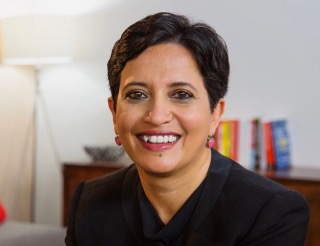
Bharath Gaddam, Data Poem: Bootstrapping Causal AI Through a Multi-Year Product-Market Fit Search
1Mby1M Research · 1Mby1M Case Study
Interviewer: Sramana Mitra
This interview is part of the case study-based research and entrepreneurship education work of 1Mby1M, the global virtual accelerator founded by Sramana Mitra.
Abstract
Bharath Gaddam, a brand marketing strategist who rose to Country Head at Omnicom, co-founded Data Poem in 2019 after discovering that neural network-based deep learning could solve a problem he had observed throughout his career: that marketing measurement systems were fundamentally siloed, unable to capture the interconnected and synergistic effects of different marketing drivers.
After validating the approach internally at Omnicom with co-founder Satya and AI specialist Chinmay, Gaddam left to build the company fully bootstrapped, relocating to the US in October 2019 and joining the 1Mby1M accelerator shortly after. The company spent nearly a year refining its go-to-market strategy – discovering that CMOs were economic buyers but not technical decision-makers, and narrowing its focus to enterprise CPG, auto, and QSR marketing teams needing agile, monthly ROI measurement. Data Poem sustained itself through a services-based enterprise account during COVID, then began charging $20,000 paid pilots per brand starting in 2021, converting its first pilot into a $2 million portfolio deal in 2022 that triggered 10-15x growth. Revenue grew from about $500,000 to $2.8 million in 2023 and nearly $5 million in 2024, achieved entirely through organic, non-marketing-driven growth, while the company built proprietary “causal architecture” AI models now positioned to benefit from broader market awareness of AI following ChatGPT’s launch.
This case illustrates how narrow vertical focus, disciplined paid validation, and patience through a multi-year product-market fit search can build a technically differentiated, bootstrapped business ready for venture-scale growth, reflecting the 1Mby1M principle of proving the model before scaling.
Transcript of the Interview
Sramana Mitra: Bharath, let’s start at the very beginning of your journey. Where were you born? What were the circumstances and what kind of background did you come from?
Bharath Gaddam: I was born in a small town in Andhra Pradesh called Tenali. My father is a production manager in a large dairy farm, and my mother is a professor in a graduate college. I graduated from Osmania University in instrumentation. During that time, I realized that maybe I’m not cut out for hardcore engineering, but some of that still stays with you.
I knew at the time that that’s not what I want to really do on a day-to-day basis. I started thinking about what I wanted to do.
One of the core things that I figured out in that journey of identifying what I should be doing is that my core being enjoys the most when my thinking influences something great or makes something better.
In a way, I understood at that point of time, that role can be three ways. One, I can go into active politics because you can influence at a higher scale, but in India, there’re no organized political professions like campaign strategists at that time. This is way back in 2002 when I was thinking what needs to be done right after my graduation.
Then the second part was my profound passion personally for brands and anything to do with brands. Brand marketing used to influence me a lot without knowing that I’m actually getting influenced by brand marketing. I used to be an ardent follower of Pepsi because it used to tell me ‘Nothing is impossible’ or the next generation messaging appealed to me.
Another great brand was Nike with its tag line ‘Just do it’. The brand you wear can tell something about you and what you want to do. In a way, the brand was resonating with what I wanted to do. I was deeply interested in it because of that, I read a book – The 22 Immutable Laws of Marketing. That’s when I decided that brand marketing can be the second option.
At that time, it zeroed down to two options, active politics and brand marketing. I chose the easier option of brand marketing, and I pursued my postgrad from one of the communication schools in India. I specialized specifically in brand marketing. I joined different communication groups like WPP and Omnicom, and worked as a brand strategist, media planner, digital strategist, and performance marketing specialist.
When I was working, even from day one of my job, I was seeing this gap. At the time, I was naïve with no influence of any sort except for theoretical understanding and the foundation of post-graduation communication strategy. I realized that all communication planning was done in silos. I was thinking, why is it done on siloed metrics, not as unified effectiveness metrics?
Then as you progress along in your career, you figure out that same question is still not answered. You’re still either putting your siloed metrics or you’ve a conviction that everything is working because there is some correlation of sorts. I was the Country Head for a communication group, had worked with Fortune 100 and 200 companies as well as small organizations.
However, I realized that across the board, the intelligence systems are broken. No one has a clear, unified view about why something is happening and why something is not happening. They all know it’s working or it’s not working broadly, no one can really point out when something is working, what is working, how much it is working, or why something is not working or why something is working.
They didn’t have that answer, and everything is done in silos. Because they don’t have the whys, everyone is trying to optimize the silos across the board – within the organization and within the consulting firms. Anyone who is guiding organizations for their growth is optimizing silos in order to pursue the end goal of growth of the organizations.
That’s when I realized that this is not how it should be done. At that time, this is 2018 I’m talking about, big data is really in for using large data sets to find patterns, understand, and find a solution. We pursued that path, but we realized that even there, there is no real solution. They’re all getting the data in one place, but they’re still using disconnected techniques, which is still very siloed.
The fundamental premise of any statistical technique is that different factors are independently influencing the outcome, right? But our experiences otherwise as human experiences, otherwise as professional experiences, all of these are interconnected factors. If your learning system is disconnected, how can you get the real truth?
Then back in 2018, we were recommended an applied mathematical solution called deep learning stroke neural networks, which was solving all my problems statements. The way I saw it was the system has to learn the interconnected effects, synergistic effects, and should be very granular in nature. It should not have any limit on the number of features that it can take, it should be able to adapt and learn continuously with the same learning as we go along.
At the time, the only solution that was ticking all the boxes was the neural networks method. No one really understood how it worked in real life. It was in the academic world at the time but was ticking all the boxes.
I was still heading Omnicom at that time, and then we said let’s try this. And it worked.
Sramana Mitra: Did you try it inside of Omnicom?
Bharath Gaddam: Yes. We were still working at Omnicom. The solution was working, and we wondered how to take it to the world. Our hypothesis is built, and we have proof that it works. It learns, it forecasts, and it can do everything that we had as a problem statement from day zero.
At that time, no one understood neural networks, including us. While I knew that it solves the problem, I, as a communication strategist, wouldn’t understand what a neural network is. I could understand investors saying that they don’t understand it and are not the right organization for it.
I saw a future where intelligent systems are making choices. At that point, I was doing great in my career. I was getting into executor roles. But, once I stumbled upon the solution, I saw my corporate career path as the past; I couldn’t live in that past. It was not past in the real sense, but I felt I was living in the past, and I didn’t want to live in the past.
So, I thought, why don’t we do it? Because you cannot live with the fact that you stumbled on it, and someone else builds it, and I end up having to use the solution. I don’t want to be on the sidelines. I can’t live with that fact.
So, back in 2019, we decided that we will do it. We told Omnicom that we will do it ourselves. I very strongly believed that that’s the future. That’s the genesis of Data Poem.
Sramana Mitra: So, you quit Omnicom at that point? Who else was with you? Was there a technical person?
Bharath Gaddam: Yes, I quit Omnicom. I told them that I’m quitting. At that time, my boss was the president of Omnicom for Media. He has also wanted to solve the same problems. So, both of us quit.
There’s a team, who supported and guided us technically. It was a company called Hotify. It was sold later to another US company called Sonos. Both of them no longer exist right now. Ankur, the founder of Hotify, was guiding us in terms of how we do this. Then when their company got acquired, Chinmay, one of the co-founders of that company, joined us as a co-founder. He is our chief of AI now.
Sramana Mitra: Who were the co-founders of this company?
Bharath Gaddam: So, me, Satya, and Chinmay, are the co-founders of Data Poem. Chinmay comes from a background of building a horizontal platform with neural networks. He said, “Okay, why don’t we create the next level of it?” That’s when he got excited. So, that’s where we start our journey.
Sramana Mitra: That’s middle or end 2019?
Bharath Gaddam: Almost to the middle end. I moved from India to the US in 2019. It was during my first visit when I first met you and 1Mby1M. That’s when we started – in October 2019.
Sramana Mitra: And your co-founder stayed in India?
Bharath Gaddam: Yes. We didn’t have enough experience of the US market at that time. Chinmay had some understanding because he worked with US clients, but primarily, we were a small team of six at the time. We decided that I’d first go and check the market, understand it, and then we’d build it as we go along. So, the first step was me coming to the US in October 2019.
Sramana Mitra: Then you joined 1Mby1M if I remember correctly?
Bharath Gaddam: Yes, absolutely. I immediately joined, within 15-20 days of coming here. Someone recommended you, and I also saw one of your posts. I don’t recall which one but someone said that, “If you’re a very early-stage startup, go speak to Sramana, and you’ll get guidance.”
Then of course, you directed me to 1Mby1M, and I joined the program. That’s what happened in 2019.
Several people told me that there will be a lot of unforeseen things that you will face when you start a company. The biggest one happened in March 2020, right? The world has seen it, not only us. I’m sure, for a lot of startups, COVID would have been a disaster.
Luckily for us, it helped us survive.
Sramana Mitra: I think what you’re pointing out happened to a lot of companies that were going after the enterprise. Enterprise conversations became a lot easier with COVID, especially for founders from India and founders from everywhere, basically, because all those were Zoom calls, and it no longer required traveling around. It no longer required visits. That actually helped a lot of entrepreneurs.
Bharath Gaddam: Yes. It also opened up calendars a lot compared to, I think, normal times where people had to worry about where there is a meeting room, even meeting room availability was also a barrier. A lot of things opened up. People were open to new ideas.
For us internally also, it gave us a good enough window for us to understand the real gaps beyond the conceptual gaps. We worked on it for the next two years, literally to get our real product version.
Sramana Mitra: I remember some of the work we did on the positioning. Summarize the process of how you’ve got to product-market fit.
Bharath Gaddam: The important part of product-market fit understanding happened during those five- six months before COVID, where we had our interactions. One of the things that we
realized early on was that you having a better solution is not the answer.
Sramana Mitra: It’s a perceived solution.
Bharath Gaddam: Yes, perceived solution. Because of our experience, we know that there is a theoretical problem, but the world is still living with it like the way the world lives with pesticide grown vegetables, right? We live with it; we cope with it.
Sramana Mitra: The world lives with a lot of problems. How big is the problem? Do people really want to solve it?
Bharath Gaddam: Absolutely. We understood that after we started the company with a very strong theoretical understanding that this is not how it should be. We had the MVP, and we said that we are faster, we are smarter, we are faster than the regular stuff.
Sramana Mitra: How did you define the problem that you were solving?
Bharath Gaddam: We were focused on marketing at the beginning, because we understand every nuance of that space. For marketing, the biggest problem is that ROI systems were broken, or the measurement systems were broken. We said, “If that is what the problem is, what are its dimensions?”
Its dimensions were not answering the synergistic effects. It was not answering the unified effect because there are multiple marketing drivers. Everything was siloed. Media was siloed; promo was siloed; shopper was siloed. It’s not unified. Then we said, “How do we create one unified system?”
Then it’s not agile enough. It’s very static. And COVID kind of built this new dimension called, I want to know what will happen faster enough rather than later. So, agility became an important dimension.
Last, but not the least, the evolving digital landscape also kind of disturbed the mental models. They wanted a faster, intelligent system which is unified and which they can act upon because COVID was fluctuating. They wanted a system that can intelligently tell them in a faster manner.
So, we were doing faster, smarter, and more agile.
Sramana Mitra: Who was the buyer?
Bharath Gaddam: During the product-market fit discovery, we thought CMO is a buyer. It’s true at some level. The budget is coming from CMO, but he’s not actually buying it. He might be the end consumer of the eventual outcome, but someone else is making the decision.
Sramana Mitra: So, CMO is an economic buyer, you still need the technical decision maker. Remember the module that I made you go through?
Bharath Gaddam: Yes, absolutely. It’s the critical distinction that you need to understand. One is this distinction that we are faster, smarter, and more agile. Then we are saying, the CMO was a decision maker. During the several initial pitches that we did, we figured out that the CMO is putting us onto the analytics guy who’s the technical decision maker. It took us one year to figure that out.
We lost one year in our GTM. That’s why I said COVID kind of helped us because we could do this iterative thing, and during the process we realized that agile is something that no one is offering. So, we narrowed it on agility because our system always had that capability.
Now, we understand that the buyer is not the CMO. We stopped all CMO outreach, and we started the outreach on analytics and predictive analytics sets.
Sramana Mitra: What was in your MVP? What did you put in the MVP that could take on conversations like this and deliver something meaningful?
Bharath Gaddam: The MVP was a simple, modeling capability with a proposition for you who is struggling to get an actionable measurement system, which is agile enough.
I would offer that. While there was a proper demo that is built on the whole system, and they can see what they can get, they really don’t know what it is because they don’t believe that agility is possible. Because for 40 years, it’s been told that agility is impossible.
Sramana Mitra: And you are selling agility. The real value proposition is to figure out which marketing programs or marketing actions are delivering the ROI, and you’re offering to do that quickly.
Bharath Gaddam: On a monthly basis. To give you the context, the normal systems would do that max once in a year. The most agile companies, if you could call them agile systems, were doing it twice in a year.
And guess what the lag is! The lag of getting that once in a six-month output is nine months. Let’s say, they would get it twice a year, which means H1 and H2. In June of 2025, they would be getting the data for H2 of 2024 or much, much earlier.
Sramana Mitra: So, you are getting them one month closer to real time.
Bharath Gaddam: So, we’re saying that we can deliver this within a month, and it’s almost too good to be true for them. So, the MVP’s proposition was getting that agility dimension and telling them that we can get it in a month’s time. It’s too good to be true.
Sramana Mitra: You got the value proposition, you got the buyer, you figured out the economic buyer and the technical decision maker, and then you did a vertical focus as well.
Bharath Gaddam: Yes, the third dimension is that we decided to do only marketing because that is where we come from. We don’t know whether it was for good or bad, but we also decided to focus on only enterprises. That’s the other call we took.
There was also the closed loop attribution trap that was going on. It kind of proved to be right two to three years later because people were doing cookie-based attribution for a lot of these digital and B2B companies. We decided that there is no point in selling them an interconnected world when they’re so sold on to the closed loop attribution or cookie-based attribution world. So, we said, let’s not fight it because they’re going into a deterministic world. Theoretically, the deterministic world is the most powerful world, but it’s not possible. They’ve already bought into that world. You can’t break it.
So, we decided that we will go to the enterprise world, because at least there you are not fighting deterministic versus probabilistic. Because of the number of drivers that they’re using, they already know that the deterministic world never works. The journey to map out TV and digital and to make a deterministic is never going to work.
So, we focused on enterprises, at least enterprises did not have a barrier of deterministic versus probabilistic.
Sramana Mitra: Really what that translates to is you needed multi-channel marketing organizations that were having difficulty attributing what’s coming from where.
So, marketing still is horizontal. You went after a vertical function within an enterprise as well?
Bharath Gaddam: No, in a way. We didn’t start out like that, but we found a sweet spot in CPG [consumer packaged goods] because they spend monthly. Their requirement in intelligence is monthly because they spend huge amounts monthly.
There was a transition from traditional systems to digital systems. So, they needed a new mental model to work on this new thing. So, that’s why they needed agility, because if you recall around 2021-22, a lot of new channels were coming in digital too. Netflix was new, Hulu was new. The entire OTT space is new for them. So, they wanted a new mental model to understand this faster so that they can make those changes.
So that’s a trigger in a way. So, vertical is a seed marketing issue. The sweet spot we chose came from the signal that we got from the market. They’re the ones who are resonating the most.
To tell you one other context of this focus, we were talking to the world about intelligence when the world was talking about productivity and operational efficiency in SaaS. Because of that, we were not funded, we were bootstrapped from day zero. We’re very focused and conscious that we must make our resources work very efficiently in all forms and means.
So, we focused only on agile enterprises, within marketing for CPG. Once we did that, we were able to talk to the largest of the enterprises. We were able to get the traction that we wanted in conversations, and then we did multiple pilots across the world, from QSR [quick service restaurants] to the latest in CPG. The initial stage was pilots.
Sramana Mitra: It was paid pilots, right?
Bharath Gaddam: Yes, paid pilots. We decided not to do anything for free. That was the first choice that we took.
Sramana Mitra: One of the important points of bootstrapping is you can’t do a lot of stuff for free. You have to charge.
Bharath Gaddam: Yes. We very strongly believed that if the proposition is what they wanted, they’ll pay for it. We’ve seen enough takers for that belief system. Even the clients never asked us for a free pilot, because they could see the value. They’d ask, “What’s the cost?”
Sramana Mitra: How did you charge for the pilots?
Bharath Gaddam: We were charging by brand. So, for any brand, we were charging $20K per pilot. It’s good enough money for us to sustain a small team. We were a relatively very small team. We didn’t hire dramatically.
Sramana Mitra: How many pilots did you close in 2020?
Bharath Gaddam: Nothing in 2020.
Sramana Mitra: Nothing? It all came in 2021?
Bharath Gaddam: No, in 2020, we did two pilots before COVID, and the momentum was building. Then the enterprises shut 2020 down and said they’re not taking on any new vendors. I can understand.
Sramana Mitra: Yes, it was an uncertainty guard.
Bharath Gaddam: It was a life and death situation. So, we went back and started building on the product. In 2021, we started with three or four pilots for very large organizations like the world’s top three spenders in CPG, auto, and QSR.
So, we got those pilots. We realized that there is value for these enterprises in this proposition. That’s the big validation that we got.
Sramana Mitra: How long did it take you to show that value with the $20K pilot? How long is the pilot?
Bharath Gaddam: The other thing that we learned in the pilot is the data systems were siloed and not ready for the kind of measurement that we had to do. It took us time to first base model setup, and then show its agility, et cetera. It took us anywhere between 20 weeks to 24 weeks. Our modeling time was still four weeks.
Sramana Mitra: You had to set up the data infrastructure?
Bharath Gaddam: Yes. Every time, the clients used to say that they’ve a great data lake. All they had was disjointed puddles created for what they call reporting framework or BI framework, which is monthly reporting on Tableau. So, they had the data, which is of kind of no use for measurement, because measurement requires much granular data.
Sramana Mitra: So, you were not charging for setting up that data infrastructure?
Bharath Gaddam: No. The client always used to say that they’ve the data. Of course, we didn’t have the stature at that time to question that. Now, I question the premise and charge for it. Honestly, we believed that the top three advertisers in the world would have it.
Sramana Mitra: You were just trying to get into the accounts; you didn’t have the luxury to question it.
Bharath Gaddam: Yes. But more than that, we believed that they would have it.
Sramana Mitra: You assumed that they had it.
Bharath Gaddam: Not assumed it, we believed that organizations spending $10 billion cannot not have a system. Of course, that belief was proved wrong.
So, the whole process was taking longer. It took 12 weeks to 16 weeks just for data setup.
Sramana Mitra: How many pilots were you able to get in 2021?
Bharath Gaddam: Only three. 2022 is when we really took off. We were easily doing 10 to 12 pilots.
Sramana Mitra: Till 2022, you survived. From 2019 to 2022, that’s two and a half of Survival.
Bharath Gaddam: Correct. Our survival was backed by an enterprise account that we got in the beginning. It had nothing on this proposition of agility. It just happened because there was an RFP where we pitched together with one of the partners, and we got a long-term account with them, which they can’t exit immediately. Even in COVID, they couldn’t exit. So that account helped us survive for the first two years.
Sramana Mitra: You did some services work. You’re bootstrapping using services.
Bharath Gaddam: Yes. It’s a platform and a service. The client would use our platform for very basic reporting and a basic level of planning. That’s not the real platform, but that helped us survive. We did that for two years, and then the pilot money helped us survive afterwards. Looking back on the journey, it looks linear, but it wasn’t linear at that time.
Sramana Mitra: Yes, it was choppy, but that’s the reality of this kind of a startup.
Bharath Gaddam: Yes. The good thing is, we are very focused on this problem statement. We didn’t move.
Sramana Mitra: It just got more specific on where you were going to add value.
Sramana Mitra: So now, let’s get specific. In 2022, these pilots started coming in and starting to convert. You have six months, let’s say, to make sure that the pilot is working. Tell me when you started getting the real deals after the pilots.
Bharath Gaddam: Yes. The real deals happened from the pilots in 2022.
Sramana Mitra: So, 2022 was when you got your first real deal.
Bharath Gaddam: Yes.
Sramana Mitra: What was the size of the deal?
Bharath Gaddam: You’ll be surprised at the size of the deal. It is close to $2 million.
Sramana Mitra: $2 million. That’s what I was hoping you were going to say, because if you have a six-month pilot cycle, it better be a very large deal after that.
Bharath Gaddam: Absolutely. It’s not worth spending $20,000 for a six month pilot.
Sramana Mitra: It’s not profitable.
Bharath Gaddam: It was not $20K alone. I was saying it’s $20K for one brand. They’re big portfolio brands. So, we’d do three brands. While we’re doing one pilot, it was for three brands – large, medium, and small brands in different formats.
Sramana Mitra: So, the $2 million deal is per brand, right?
Bharath Gaddam: No, the $2 million was for the entire portfolio.
Sramana Mitra: For the entire portfolio. Okay, got it. So, you got a large portfolio of brands to work with, but it was a $2 million deal from one customer relationship.
Bharath Gaddam: Yes.One customer relationship. So, we converted every pilot that we did.
Sramana Mitra: Wonderful. What were the payment terms of the $2 million deal?
Bharath Gaddam: Monthly license fee.
Sramana Mitra: So, you were getting paid on a monthly basis. It was a steady cash flow, and it was enough to support your small team.
Bharath Gaddam: They understood the value that we’re bringing in, and they helped us with the initial setup. These organizations tried everything else, and everyone in the world said it’s not possible. So, they understood that we are the only ones who are doing it.
Of course, they didn’t tell us, but we know that we are the only ones who are doing it. Even today, after five years, while others can just claim a tick mark that they’ll do it, no one can do it.
Sramana Mitra: So, what were they paying for the setup?
Bharath Gaddam: A good 10 % of the license value.
Sramana Mitra: Okay, so $200K for a $2million contract.
Bharath Gaddam: A little more than that perhaps. I don’t know the exact number. They did pay a good 10% or above.
Sramana Mitra: So, in 2022, you got your first $2 million deal. And what else did you get that year?
Bharath Gaddam: That year we also got one auto deal, one QSR deal,..
Sramana Mitra: Those are all Portfolio deals?
Bharath Gaddam: They’re full deals, but they’re not portfolio deals that we expected. There were three brand deals and one business line deal. Then we scaled a lot, literally 15x from where we were. We’re landing at every level in terms of scale of brands, scale of data and revenue. We shot up 10x to 15 x.
Sramana Mitra: It was an inflection point.
Bharath Gaddam: Then we thought you won’t get into this space every day. So, we decided to implement this properly. That’s the other conscious choice we made. We didn’t go after growth again. We’d already got to 15x. Next, if you don’t do it right, we’ll fall into the pit.
We decided not to do any marketing or reach out anywhere. Let the word of mouth spread, we’ll only work on incoming inbounds.
In 2023, we’re handling 30 brands in one go. When we say agile, it is not just agile as a system, it is agile as a company too. You are kind of transforming the way every brand will operate. It’s not easy. People go through a transformation journey through us, because they’re all used to these one-year and half yearly planning cycles.
Sramana Mitra: Their workflow is changing because of what you’re delivering.
Bharath Gaddam: Yes. So, you have to go through that too. It took us six-seven months to set up all these 30 brands in different stages. In hindsight, we took the right decision not to go for marketing and growth. Otherwise, we’d have been crushed.
Sramana Mitra: Consolidated.
Bharath Gaddam: Yes, we consolidated great feedback from all the existing clients. Everyone increased the portfolio with us. It gave us a second spurt of growth without even marketing, and that helped. At that time, we knew what we wanted to build – even back in 2020. We didn’t have the exact words for it then, but we were calling it a “metamodel” – something that could understand the category, how it works, and what’s happening within it.
We didn’t have the resources yet, so we started with what we called a small causal architecture. But we knew we eventually needed to build large causal architectures to realize that vision. So, in parallel, we began developing the large causal architecture to bring that early vision to life. Throughout 2023, we continued to grow – mostly through organic inbound. But for us, that was good growth; in fact, we nearly doubled during that period.
Sramana Mitra: What were the ARR numbers between 2022 and 2023? Can you walk me through that growth?
Bharath Gaddam: Sure. We closed 2023 with an ARR of about $2.8 million – almost $3 million. We had started at around $500K, so it was a strong growth year. And then in 2024, we doubled again to nearly $5 million. We were consolidating, making sure everything was stable, while continuing to focus on our core offering – what we now call large causal architecture.
At that time, we weren’t even using terms like AI. We were selling it as a mathematical application – deep learning or neural networks. When ChatGPT launched in 2023, the market suddenly became more aware. Everyone now understands what AI can do.
Sramana Mitra: Yes, now you can sell it as deep learning, AI, and all of that. But back then, it wasn’t so easy.
Bharath Gaddam: Absolutely. That’s why in 2024, the awareness helped us accelerate. We still haven’t spent a dollar on paid marketing. All our growth has been through organic efforts – email campaigns, technical paper submissions, conferences, etc. We were waiting for our breakthrough moment – and that’s happened in the last 3-4 months, thanks to the education OpenAI and ChatGPT have done about AI’s potential.
Even back in 2019, we understood that deep learning had three dimensions: language, vision, and time-series data. While everyone was focusing on language and vision, we went deep into time-series – because that’s where enterprises need to understand why something is happening, not just what.
We knew LLMs couldn’t answer the “why.” That’s why we started building causal architectures – deep, explainable models capable of answering causation questions.
Our approach leverages transformer architecture, just like OpenAI’s LLMs, but in a unique way – focused on enterprise data and causation. We saw incredible internal results, and now that people understand what LLMs can do, it’s our moment to introduce the next evolution: causal intelligence.
We built models that outperform the best benchmarks, like the M5 forecasting competition. The 2021 winner used multiple models—ours did better with a single large causal model.
That’s the power of our system. With this, brands can understand what’s happening, why it’s happening, and how to improve it. We’ve built a foundational model, trained on trillions in consumer spending, across 15,000 brands and categories. We call it Palm 365—and it delivers deep forecasting, optimization, and planning insights.
Sramana Mitra: You’ve built deep technology in collaboration with top-tier enterprise customers. And you’re seeing expansion within those accounts?
Bharath Gaddam: Yes, absolutely. This is exactly the position you want to be in for venture-scale growth.
Sramana Mitra: It’s taken five to six years to get here, but now you’re ready for fast growth.
Bharath Gaddam: Yes. There are no limits for us now.
Sramana Mitra: I can’t tell you how thrilled I am to hear this.
Bharath Gaddam: Thank you. You believed in this when it was just an idea. That support gave me the confidence to pursue it with grit. As a founder, you have your own belief, but when someone with experience validates it, it makes a difference.
Sramana Mitra: Whatever little role I played, I’m thrilled. Come see me when you’re in California.
Bharath Gaddam: I’m coming next month. I’ll meet you then.
Sramana Mitra: Looking forward. Take care.
Key Takeaways
- Bharath Gaddam bootstrapped Data Poem from 2019, sustaining the company through a services-based enterprise account during COVID before shifting to paid pilots – charging $20,000 per brand – starting in 2021, deliberately never offering free trials.
- It took the company roughly a year to correctly identify its buyer, discovering that CMOs controlled budget but analytics and predictive-analytics teams were the actual technical decision-makers, and to narrow its focus to agile, monthly-cadence marketing measurement for enterprise CPG, auto, and QSR brands.
- The first converted pilot in 2022 became a $2 million portfolio deal on a monthly license model, triggering 10-15x growth; the company then deliberately paused marketing and growth efforts to properly implement and stabilize its expanding client base rather than overextend.
- Revenue grew from about $500,000 in 2022 to $2.8 million in 2023 and nearly $5 million in 2024, entirely through organic inbound growth with no paid marketing spend, while the company built proprietary “causal architecture” AI models that outperformed established forecasting benchmarks like the M5 competition.