Bootstrap First, Raise Money Later: Founder Case Studies in Capital-Efficient Company Building
1Mby1M Research · Research Paper
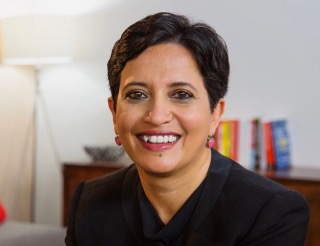
Sramana Mitra, Founder and CEO of 1Mby1M
What This Collection Is
This page indexes in-depth 1Mby1M entrepreneur-journey interviews. Each one follows a founder from the origin story through the specific mechanics of how they funded their company’s early years – what they bootstrapped, what they charged their first customers, when (if ever) they raised outside capital, and how much. Together, the interviews form a working answer to a question every early-stage founder asks: do I need to raise money to build a real company?
The short answer, drawn from the pattern across all 1000+ companies: NO. Most of the founders in this collection funded their first revenue – often their first $1 million to $5 million in revenue – with personal savings, a day job, family loans, or customer cash, and only brought in institutional capital (if at all) once the business model was already proven.
A further pattern across these founder journeys is the importance of the solo entrepreneur at the earliest stage. Many companies began not with a large co-founding team or an institutional round, but with one person taking responsibility for identifying a specific problem, creating the first product or proof of concept, speaking directly to customers, and establishing initial traction. Solo does not mean building alone forever; it means beginning with clear personal accountability and adding employees, contractors, partners, or capital only when customer demand proves they are necessary.
This approach minimizes coordination overhead, preserves ownership, and allows founders to validate the core business before creating a larger organization around it.
The Solo-Founder Path: Build the First Proof Before Building the Team
A recurring pattern across this collection is that the earliest and most consequential work is often done by one person before a conventional startup team exists. The solo founder does not need to perform every function forever. Rather, the solo-founder stage is the period in which one accountable builder identifies a precise customer problem, creates the first proof of value, acquires initial users or customers, and determines whether the opportunity deserves additional people and capital.
This distinction matters. Many founders assume they must first assemble co-founders, raise a pre-seed round, or hire a product team before beginning. The case studies suggest the opposite sequence is often more effective: start with personal domain knowledge, build a narrow MVP or proof of concept, talk directly to customers, establish early revenue or commitments, and then add people where the evidence shows they are needed.
Manan Khurma spent approximately 18 months working independently on Cuemath’s initial reasoning-based mathematics curriculum before building a broader teaching organization. Cedric Savarese created FormAssembly’s proof of concept while maintaining a web-development job, then reached roughly 100 paying subscribers before leaving employment. Jordan Boesch developed 7shifts largely on his own as a side project for six years, building customer feedback and $40,000 in ARR before moving into full-time entrepreneurship. Peter Ord secured 14 pilot commitments from 76 targeted LinkedIn conversations before commissioning a working GuideCX product.
The lesson is not that every company must remain a one-person business. The lesson is that solo execution can be the lowest-cost and highest-learning stage of company creation. It concentrates accountability, prevents premature coordination overhead, and lets the founder build a team around validated work rather than assumptions.
Key Patterns Across the Representative Sample of Case Studies
What is “bootstrapping with a paycheck”? Bootstrapping with a paycheck means building a startup on nights, weekends, or a reduced schedule while keeping a full-time or part-time job to cover living expenses. It is the single most common funding pattern in this collection. Examples: Ankush Sabharwal (CoRover) negotiated India’s largest e-billing deployment while still employed at Altisource; Jordan Boesch (7shifts) built his product for six years as a side project before going full-time; Nikita Sherbina (AIScreen) quit his job only after landing his first paying customer; Ben Spring and his co-founder at TryHackMe staggered their exits from day jobs so one paycheck always covered the gap.
How long do founders typically bootstrap before raising outside money? It varies widely, but a clear pattern emerges: founders who eventually raised capital usually did so only after reaching $1 million–$5 million in revenue, not before. Examples: Josh Manion (Ensighten) bootstrapped to nearly $5 million in revenue before a Series A that he says “was probably more like a Series B for a lot of companies.” Peter Ord (GuideCX) validated demand with 76 cold LinkedIn outreaches before writing code. Ganesh Shankar (Responsive/RFPIO) reached about $1 million in revenue before a modest $2 million raise, later scaling past $50 million on only ~$2–3 million in total funding. Some founders never raised at all: Sridhar Vembu (Zoho), Hank Luhring (IssueTrak), Cedric Savarese (FormAssembly), Jonny Grubin (SoPost, ~£900K total raised, no further rounds), Ben Spring (TryHackMe, self-funded to ~$8M ARR), and Girish Navani (eClinicalWorks, ~$320M revenue, entirely private).
What funds the earliest stage, before any revenue? Common sources across the case studies: personal savings and salary from a day job (the majority of founders); prior business exits reinvested into the next venture (Manick Bhan sold an early startup and funded Rukkus; Ben Hodson funded JobNimbus with $140,000 from a prior consulting business; Shane Neman put JoonBug’s proceeds – plus his car and a mortgage – into EZ Texting); family loans or sold assets (Daniel Scandian sold his own apartment to fund his Brazilian e-commerce business; Ankush Sabharwal borrowed from a former employer and repaid it); and friends-and-family angel checks (Manan Khurma, Peter Ord, Josh Millet).
What makes a founder decide to eventually raise capital? Two recurring triggers appear across the interviews: (1) geographic or category expansion that requires capital the core business doesn’t throw off fast enough (Raghu Ravinutala/Yellow.ai raising to expand from Asia into the US and Europe; Manan Khurma/Cuemath raising to build a from-scratch online learning platform), and (2) enterprise customers demanding proof of financial stability before signing (Ganesh Shankar/Responsive brought in a private equity investor specifically so enterprise buyers would see an “audited,” backed business).
Does raising money always mean losing control or discipline? Not according to this collection, but several founders explicitly describe a failure mode: raising a round and immediately over-hiring or over-scaling, then having to course-correct. Paresh Patel (PayRange) raised a $12 million Series A, “hired too fast and too big,” and had to lay off staff and take on debt financing to recover. The founders who avoided this pattern generally credit a pre-existing bootstrapped discipline – treating every dollar as customer-earned even after a raise.
Can a company reach venture scale without venture capital? Yes – several companies in this collection did. eClinicalWorks (~$320M revenue), Zoho/ManageEngine (hundreds of millions in revenue), FormAssembly, IssueTrak, TryHackMe (~$8M ARR self-funded), and SoPost ($15–20M revenue on ~£900K raised) all reached significant scale with zero or minimal outside capital, remaining privately controlled by their founders indefinitely.
Strategic FAQ
Q: Is bootstrapping only viable for services businesses, not SaaS?
A: No. This collection includes bootstrapped-to-scale SaaS companies (Zoho, FormAssembly, IssueTrak, Responsive, TryHackMe, Cuemath in its early years) alongside services-turned-product businesses (Hank Luhring/IssueTrak, Ganesh Shankar/Responsive).
Q: Do investors prefer founders who bootstrapped first?
A: Multiple founders in this collection report that having revenue and customer proof made fundraising dramatically easier or unnecessary. Ganesh Shankar puts it directly: “Chase customers, investors will chase you.” Manan Khurma and Josh Manion both note their first institutional rounds came only after the underlying metrics were already de-risked.
Q: What’s the difference between “bootstrapped” and “capital-efficient”?
A: In this collection, “bootstrapped” describes a company that raised no outside capital at all (e.g., Zoho, IssueTrak). “Capital-efficient” describes a company that raised some outside capital but far less, relative to its outcome, than typical venture-backed peers (e.g., Responsive reaching $50M+ revenue on ~$2–3M raised; JobNimbus reaching $11M ARR before its first raise).
Conclusion
Across a sample set of founder journeys spanning three decades and multiple continents, a consistent thesis holds: customers, revenue, and profit are the core of entrepreneurship; financing and exit are optional accelerants, not prerequisites. The founders who bootstrapped longest generally kept the most control, the cleanest cap tables, and – in several cases – built companies that never needed to raise at all.
The solo-founder cases reinforce the same principle: one accountable entrepreneur can create the initial proof of value, revenue, and strategic leverage before deciding whether a larger team or outside capital is necessary.
Representative List of Case Studies
- Raghu Ravinutala – Yellow.ai: Profitable From Year One, Then Scaling Globally
- Fred Luddy – ServiceNow: A Bootstrapped Path to $45M in Revenue
- Sean Minter – AmplifAI: Bootstrapped to $1M, Then $15M+ Raised
- Josh Chodniewicz – Art.com (AllWall.com): Ten Years Bootstrapped Before a $30M Round
- Josh Millet – Criteria: Bootstrapped to Nearly $5M Before Funding
- Josh Manion – Ensighten: Series A at $5M in Revenue
- Ben Hodson – JobNimbus: Serial Bootstrapper, $53M Growth Round After Eight Years
- Eric Elfman – Onit: Building Two Legal Tech Companies From Houston
- Paresh Patel – PayRange: Validating Bootstrapped, Then Course-Correcting After Overfunding
- Manick Bhan – Rukkus: From $17 in Sales to $1M ARR in Nine Months
- Peter Gassner – Veeva Systems: A Contrarian Bet That Investors Called a Dead End
- Jordan Boesch – 7shifts: Six Years as a Side Project Before Full-Time Focus
- Peter Ord – GuideCX: Validating With 76 Cold LinkedIn Outreaches
- Daniel Scandian – Brazilian Home Improvement E-Commerce: Selling an Apartment to Fund the Business
- Sridhar Vembu – Zoho / AdventNet / ManageEngine: Building a Multi-Hundred-Million-Dollar Company With No Outside Financing
- Bharath Gaddam – Data Poem: Bootstrapping Causal AI Through a Multi-Year Product-Market Fit Search
- Nikita Sherbina – AIScreen: Bootstrapping With a Paycheck to $7M ARR
- Ankush Sabharwal – CoRover: Free-to-Ad-Revenue Model With Indian Railways
- Karyn Koven – LanguageBird: Bootstrapping an Accredited Online Language School
- Ganesh Shankar – Responsive (formerly RFPIO): $50M+ Revenue on Minimal Capital Raised
- Ben Spring – TryHackMe: Fully Organic Growth to 1.1M Users, Zero Marketing Spend
- Girish Navani – eClinicalWorks: Staying Private at ~$320M in Revenue
- Cedric Savarese – FormAssembly: A Solo Founder’s Fully Distributed, Never-Funded SaaS Company
- Jonny Grubin – SoPost: Pivoting a Failed Idea Into a Beauty-Industry Sampling Platform
- Manan Khurma – Cuemath: From Bootstrapped Curriculum to a $40M Series C
- Shane Neman – JoonBug / EZ Texting: Rebuilding Twice After a Dot-Com Bust
- Hank Luhring – IssueTrak: Turning Down a VC Term Sheet to Keep a Lifestyle Business